Showing posts with label moral. Show all posts

Officer Buckle And Gloria - Peggy Rathmann (1995)


                 Caldecott Winner - 1996

         Safety Tip #1 : Never tell a safety tip, without some fun added to it. Well, this book followed this tip to a T, and it is a grand success with kids.

Safe Fun

        Officer Buckle, of Napville town, knows many safety tips. But, safety tips are not fun to hear. So, no student in Napville school listens to the officer's 'safety tip' speech. But, things change, when Officer Buckle brings a new police dog, Gloria, along to his speech.

It's An Orange Aardvark - Michael Hall (2014)


          With five carpenter ants and some peep holes, what story could you possibly write? But Michael Hall can write an amazing story with an outstanding moral in it.

Is it really an aardvark?

       
           Five carpenter ants living in a wood stump, hear a rumble outside. An ant with 'red hat' (The ants are color-coded with carpenter hats) is sure that it is an aardvark. The three 'blue hat' ants are scared to death now, as aardvarks prey on ants. But the brave 'yellow hat' ant drills a peep hole in the stump to see the outside. When orange color appears in the peephole, the 'blue hat' ants are relieved. (It's just orange color like orange). But, the 'red hat' ant scares everyone that it could be an orange aardvark.

The Nearsighted Giraffe - A.H. Benjamin (2013)


ISBN 10 : 1-60992-433-9
ISBN 13 : 978-1-60992-433-1
(Hardcover)
      Will glasses make a giraffe look silly? Well, that's what this nearsighted Giraffe thinks and she refuses to wear one. But, how does she manage to walk through the forest?

A foresight solution

        She wears a bicycle helmet, after she banged her head on a branch. She ties a bell to her tail, after she crashed into a rhino. She starts to wear boots, after she hurt her foot on a rock. Not to stop with that, she adds a pillow, an inflatable ring and a ladder one by one, after every crash, until she looks ..... yes, super silly.

You Are What You Eat And Other Mealtime Hazards - Serge Bloch (2010)


ISBN 10 : 1-4027-7130-4
ISBN 13 : 978-1-4027-7130-9
(Hardcover)
              Imagine a potato lying on a couch ("couch potato"), a stomach opens its mouth to growl ("stomach growling") and a horse dining in a table("eat like a horse"). Yes, you got it. This book cartoons the various idioms based on food, interluded with the story of a picky-eater changing into a "tough cookie".

Fun Down to a T

              The protagonist of this book is a picky-eater, who eats like a bird. Even when he is advised to "think outside the box" and to "use his noodle", he is not ready to change. But things get a different turn, when he is invited over to his friend's house (whose mom is a "health-nut"). Does this picky-eater "chicken-out" or "brave it out"?

The Boy & The Book [A Wordless Story] - David Michael Slater (2015)


ISBN 10 : 1 58089 562 X
ISBN 13 : 978 1 58089 562 0

             Ripping, folding and tossing a book are no ways to love a book. But, here comes the nightmare to the books and the book lovers.


A Book Lover

             A naughty boy enters the library. He picks a book. Oh, no... he is not reading it. He tosses, tears, folds and stomps on the book. And, then leaves it. The poor damaged book  is helped by his other book friends (Yes, the books are also characters in this story), with glue and clear tape.

How Are You Peeling? - Saxton Freymann & Joost Elffers (1999)


ISBN 10 : 0 439  10431 9
(Scholastic 2004 Edition)
Hardcover

           A tomato is happy. An orange is jealous. An onion is sad. Oh, yes, you read it right. Those are all vegetables and fruits, emoting out. And, also they come out with a perfect moral "It's alright to show your emotions".


To Emote Is Your Right
     
      This book talks about emotions, but not in a philosophical way. In a very funny and ingenious way, with the vast array (photographs) of various vegetables and fruits, the authors have showcased emotions from happy, sad, tired, frustrated, angry etc. (The cover shows a smiling bell pepper).

Give And Take - Chris Raschka (2014)


Strike the balance
ISBN 10 : 14424 16556
ISBN 13 : 978 14424 16550

       Balancing is very important to life (No, it does not refer to physical balancing).  We balance work and fun, food and diet and almost everything in life. The author-cum-illustrator Chris Raschka has enunciated another balance, 'Giving' and 'Taking', through this brilliant story.

       When a farmer (along with his dog) harvests apples from his orchard, he meets a tiny man "Take". Upon "Take's" advice, he takes lot of pumpkins from a neighbor, which he doesn't like at all. Next day, he meets another tiny man "Give". Today, he gives up all his apples and ends up with nothing.

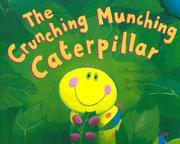
The Crunching Munching Caterpillar - Sheridan Cain (2000)


ISBN 10 : 04392  98008

Eat, Sleep, Dream, Fly 

           A pair of wings and a feather-light body are needed for flying. Where on earth, a caterpillar can get those, if he wishes to fly? Simple, all he has to do is crunch and munch fresh blackberry bush leaves and sleep well.

           There is a cute caterpillar who wanted to fly. The caterpillar meets a bumble bee and tells his wish. But bumblebee says that the caterpillar don't have wings and he cannot fly. Then the caterpillar meets a sparrow, who says that the caterpillar is heavy and he cannot fly.

          But finally he meets a butterfly. The butterfly asks him to sleep well and says that his dreams might come true. After eating, sleeping and Voila!, the caterpillar is now a ...........

       Illustrated By : Jack Tickle


       Publisher : Tiger Tales


       Classification : Moral (Never Let Negative Words Drown You)


                                 Emotional(Dreams & Wishes), Science(Butterfly Life cycle, Flying)


       Age : Preschooler, Kindergartener, Grades 1- 3


My Comment:


       No kid is ever going to get bored with caterpillars and butterflies. This book would be another successful example for this theory. Apart from a cute story, that any kid would love, this book has adorable layout designs and lovely pleasant illustrations:

  • The bitemark at the corner of the book, similar to the marks on leaves bit by the caterpillar (I think this is only in paperback format).
  • The font changes with the moods of the story, in some places: The dream version has a different font. The font of the phrase 'stretched and stretched' really stretches and stretches.
  • I can see that adorable caterpillar with his lovely smile, again and again.
  • The Background colors are vibrant and the exquisite illustrations can hold the attention of even impatient kids.

       In the background of this story, I can see two science lessons: 1. Life Cycle of Butterfly 2. Science of Flying. If you want, you can extend the lesson by asking what are the basic necessities for a thing to fly.

       For the love of butterflies and caterpillars, travel along with this caterpillar's life.

        What is your 'book thoughts' about this book? Best, Good, Okay or Yet to Read. Mark your options down.


<Home>


The Mixed-Up Chameleon - Eric Carle (1975)

       We all know chameleons change colors. But, what happens when a chameleon wants to change its very identity? 

An Identity Crisis
      

       Here is a chameleon, who has a perfectly normal life, changing colors with the surroundings and catching flies. One day, he sees a zoo and many beautiful animals. He wishes to be like the colorful animals in the zoo and in a magical way, his wishes come true.


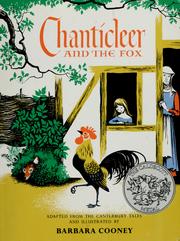
Chanticleer and the Fox - Barbara Cooney (1958 - First Ed.)


ISBN 10 : 06900 4318X
1982 Ed. - Crowell
           Caldecott Winner - 1959

        Why would a fox praise the song of a rooster? Well, anyone can see the fox is trying to flatter the rooster. But, Chanticleer, the proud, boasting rooster believes the fox and puts himself in trouble.

Don't fall flat for flattery
          
         Chanticleer is a proud rooster, living in the yard of a poor widow, with his seven hens. One night, he has a nightmare about a beast. But, with the advice of his favorite hen(!) Madam Partlet, he neglects the dream. The same day, he meets a fox in the yard, who praises him for his singing. The fox also gives a tip to Chanticleer, to sing with his eyes closed, stretching his long neck and standing on tip-toes.


Horton hears a Who - Dr.Seuss (1954)

Horton, the hero, who saved a world


      Who needs an introduction to Horton, the humble, cool and brave elephant hero, who saved the world of  Whos', despite all the hardships he faced? Of course, he is a one-of-a-kind hero, who can't be forgotten that easily.
     
       Horton's life was normal, until the day he heard voices from a small clover. Eventually, he understands that there are people (In fact, a whole town, Whoville) in that clover and he even communicates with the Mayor of Whoville. But the people in Whoville are so minute and can't be seen with normal eyes. 

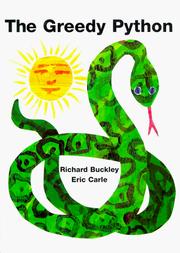
The Greedy Python - Richard Buckley (1985 - First Ed.)

ISBN 10 : 0887080014

Too much of anything is good for nothing

      Overeating has never been a good thing. And that's exactly what happened to this python. He is very long and strong. Also, he is very greedy, especially when it comes to eating. 

      One day, he starts eating a mouse, then a frog and a bat. This list goes long with a fish, a bird, a porcupine and so many other animals ending with a giant elephant. Soon he feels sick and he coughs back every animal, he has eaten. 

      Being a greedy python, he has never learnt his lesson and started eating his own tail and OOPS......?

Illustrator : Eric Carle


Publisher : Picture Book USA - First Ed.


Classification : Moral, Emotional (Greedy)


Age : Preschooler, Kindergartener, Grades 1- 3


My Comment:

       This book comes from the rich combination of Eric Carle and Richard Buckley (I cannot count how many times I have read "The Foolish Tortoise" to my kids, another book from the same author and illustrator combination).

       The animal illustrations by Eric Carle are always vibrant and could catch the eyes and minds of kids (including babies and toddlers). This book gives me another opportunity to tell the same about the great illustrator.

       The narration of Richard Buckley combines mockery and rhyming, with a perfect moral. In my view, the moral works in two ways:
  • My preschooler son understands it in a simple way; 'If you eat with greed, you will destroy yourself'.
  • To my second grader, I explained this analogy; 'If you become greedy about anything (money, fame etc.), it would eventually destroy you' (A bigger moral for a bigger boy).
      Also, the narration of the author is direct and precise to make it understandable to even smaller kids. To sum up, this python would make a good reading time, filled with fun and moral.

      Note : This book fits toddlers also. But since the concept of a python eating himself might be heavy for that age group, I didn't mention 'toddlers' in the age group of this book.

<Home>    

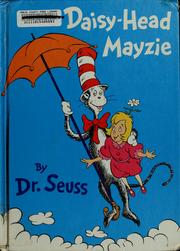
Daisy-Head Mayzie - Dr.Seuss (1994)


ISBN 10 : 0679867120
      (This is the last book written by Dr.Seuss. The illustrations in this book are not by Dr.Seuss, but are inspired by his other works. This manuscript was found after he died and was published later.)


A Daisy Over-the-top  
    
  
      The world turns upside down for little girl Mayzie, when a daisy sprouts and blossoms on her head. When her teacher, the principal, her parents and a group of other grown-ups are trying to get a hand of the problem, media invites and makes Mayzie popular. When Fame makes her alone, detached her from family and friends, she cannot take it anymore, until she turns to her normal self.


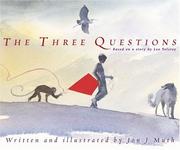
The Three Questions - Jon J.Muth (2002)

Three Questions and three values for life


ISBN 10 : 0439199964
          Based on the short story 'The Three Questions' by Leo Tolstoy, this clever adaptation by Jon J. Muth, gives answers to three questions, asked by a boy named 'Nikolai'. 

          Nikolai searches answers for three questions:
  • When is the best time to do things?
  • Who is the most important one?
  • What is the right thing to do?
           Since he is not satisfied by the various answers given by his friends, he goes to a wise turtle. But, Leo, the wise old turtle, is not going to reveal the answers directly. He has a way to make Nikolai to understand them.

         Publisher : Scholastic Press


            Classification : Moral (Philosophy)


            Age  : Grades 1- 3

My Comment:

      We might have read many books to our kids, to enhance their vision. But there are certain books, which enrich us in the process. I consider this book as one. The answers to the three questions not only appease the kids' quest, but make us a bit more enlightened.

    The adaptation of this story, from Leo Tolstoy's original, is very apt. While the original comes with a king and a hermit, this adaptation characterises a boy who is asking the questions and a wise turtle answering them. This makes the book more approachable to kids. The watercolor paintings add a firm backstage to this wonderful story.

            Totally, I consider this book reading as a distinctive experience with my kids.

<Home>


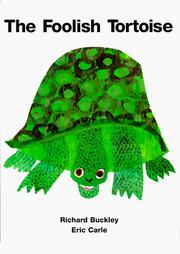
The Foolish Tortoise - Richard Buckley(1985 - First Ed.)

A Bold Message - "Consider the Consequences"

ISBN 10 : 0689820585
       Everyone makes bad decisions at times. A tortoise is no exception. The  tortoise in this story hates being always slow and takes off his shell to move fast. But before the end of the day, he learns that his shell protects him from various dangers and harsh weather. Finally reaching the shell, he feels safe once again.

             Illustrator : Eric Carle 

               Publisher : Little Simon

               Classification : Moral, Science (Shells)     

              Age : Preschooler, Kindergartener, Grades 1 - 3


My Comment:

    I have always felt certain messages are hard to tell in a kid-friendly way. But this book broke my opinion. It comes with a high level message of "understanding the consequences", in a way even kids can get it. The poetic narration makes it a pleasure to read again and again. 

     Eric Carle's illustrations should be noted separately, as they carry the  entire background of the story in bright colors.(Obviously, the reason why small kids get attached to Eric Carle's books much. They love to go through the pictures repeatedly.) I am also happy that I can explain to my younger son why tortoises and turtles need shells. So, a lot is packed in this simple book - moral story, poem, bright and meaningful pictures, science. Whichever angle you read this book, you can interpret good things from here.


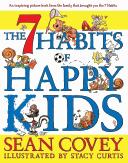
The 7 Habits of Happy Kids - Sean Covey(2008)

ISBN 10 : 1416957768
ISBN 13: 9781416957768
     Utilize your time. Work hard. Save your money. I know, no kid would lend an ear to this kind of advice. But what could we do? Maybe, use this book next time.

I wish advising is always this fun and easy
 
         The seven stories in this book branch about seven kids in the '7 Oaks' to emphasize the seven life morals. One kid gets bored. One wants to buy a toy but has no money. One has to study for test, instead he plays. All the seven kids has problems that a typical normal kid can face. Each of the seven morals sets the record straight for each kid.

Seven Blind Mice - Ed Young (1992)


                                Caldecott Honor-1993
ISBN 10 : 03992 22618
         
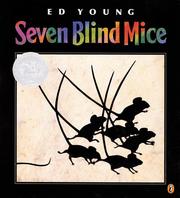
         Opinions differ from person to person. But how could seven blind mice decipher the same object as various things? Here is an Indian fable that establishes that incomplete knowledge could lead to false ideas.


A pillar + A snake + A spear + A cliff + A fan + A rope = ?


            Seven blind mice got curious about the new strange thing near their pond. Each day, each mouse takes a turn and examine the new thing. But their opinion differs, since they examined the different parts of that new big thing. One says that it's a pillar, one says that it's a snake, other a spear and so on. 

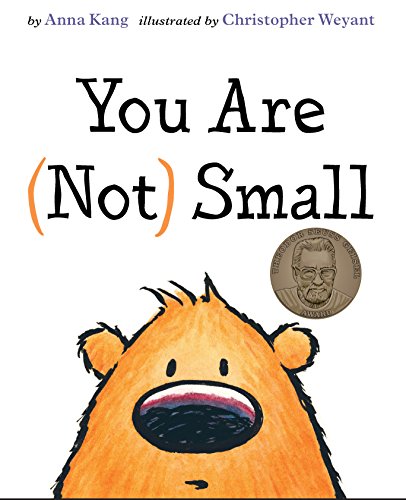
You Are (Not) Small - Anna Kang(2014)


Image Credits : apub.com
ISBN 10 : 14778 47723
ISBN 13 : 978 14778 47725

          (Theodor Seuss Geisel Award - 2015)


Big is small; Small is Big                  
          How does a 'big' become 'small'? If the 'big' gets nearer to a 'very big'. How does a 'small' become 'big'? If the small gets nearer to a 'very small'. Confusing? Read this book and your kid can understand this comparison easily.

          There are two characters in this book, a big one and a small one. They break into a fight about who is big and who is small. Then there is a whole bunch of big and small creatures, who are involved in this comparison.

Once a Mouse - Marcia Brown (1961)


        Caldecott Winner - 1962
      
         When self-confidence crosses the line and becomes boasting, there is always a lesson to be learnt. Based on an ancient Indian fable, this story is about a 'small' mouse becoming a 'big' powerful tiger and starts boasting about his powers.


Small to Big

           A hermit is thinking about 'big and little' (Is it about the physical sizes or thoughts? Who knows what is inside a hermit's mind?). At that time, he sees a mouse, who is being preyed upon by a crow. To save the mouse, he transforms it into a cat, with his magical powers. Again when the cat is about to be snatched by a dog, he changes it into a bigger dog. This series repeats until he finally makes the mouse, a tiger.